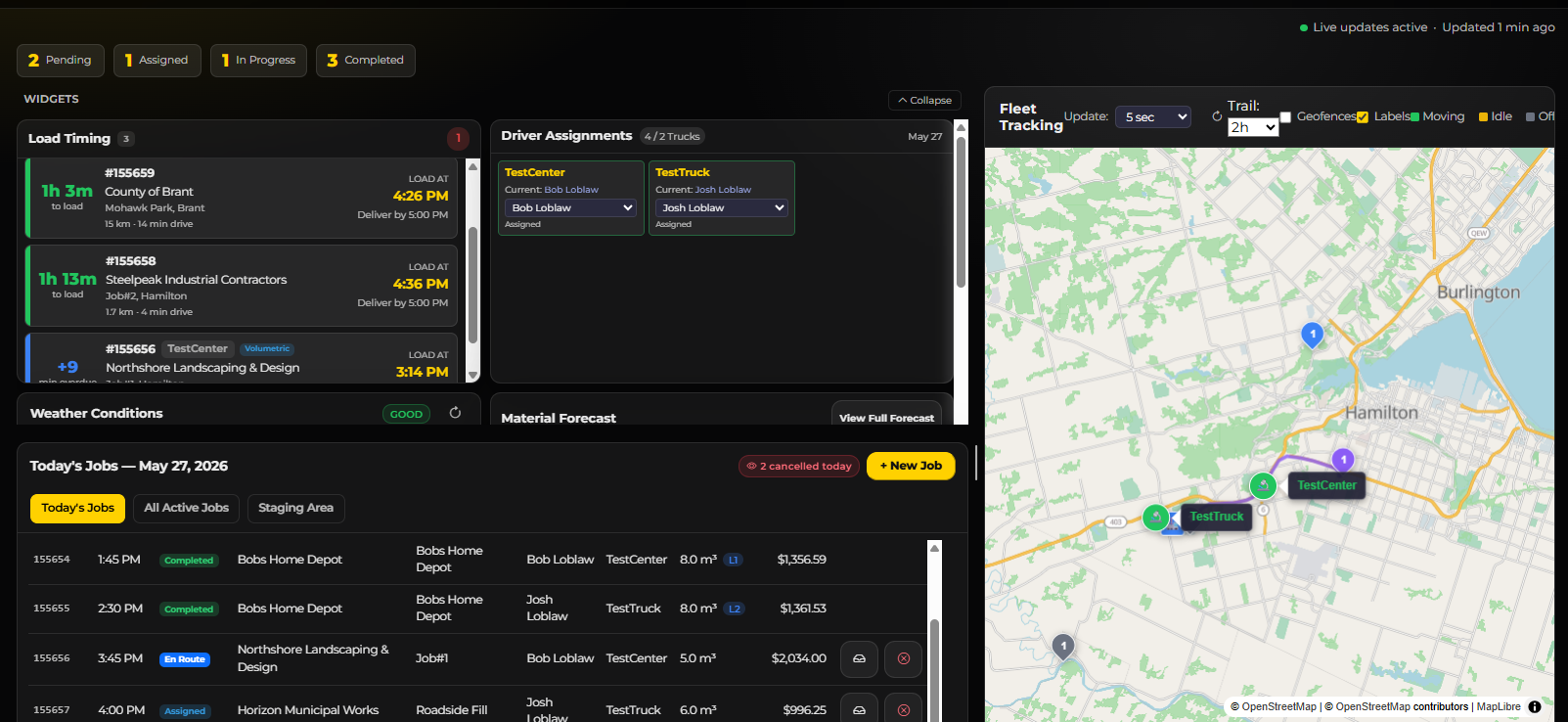
Run the day from a live board and build the week on a drag-and-drop calendar, with route sequencing, weather, driver assignment and a reconciliation step that matches what was poured back to what was ordered.
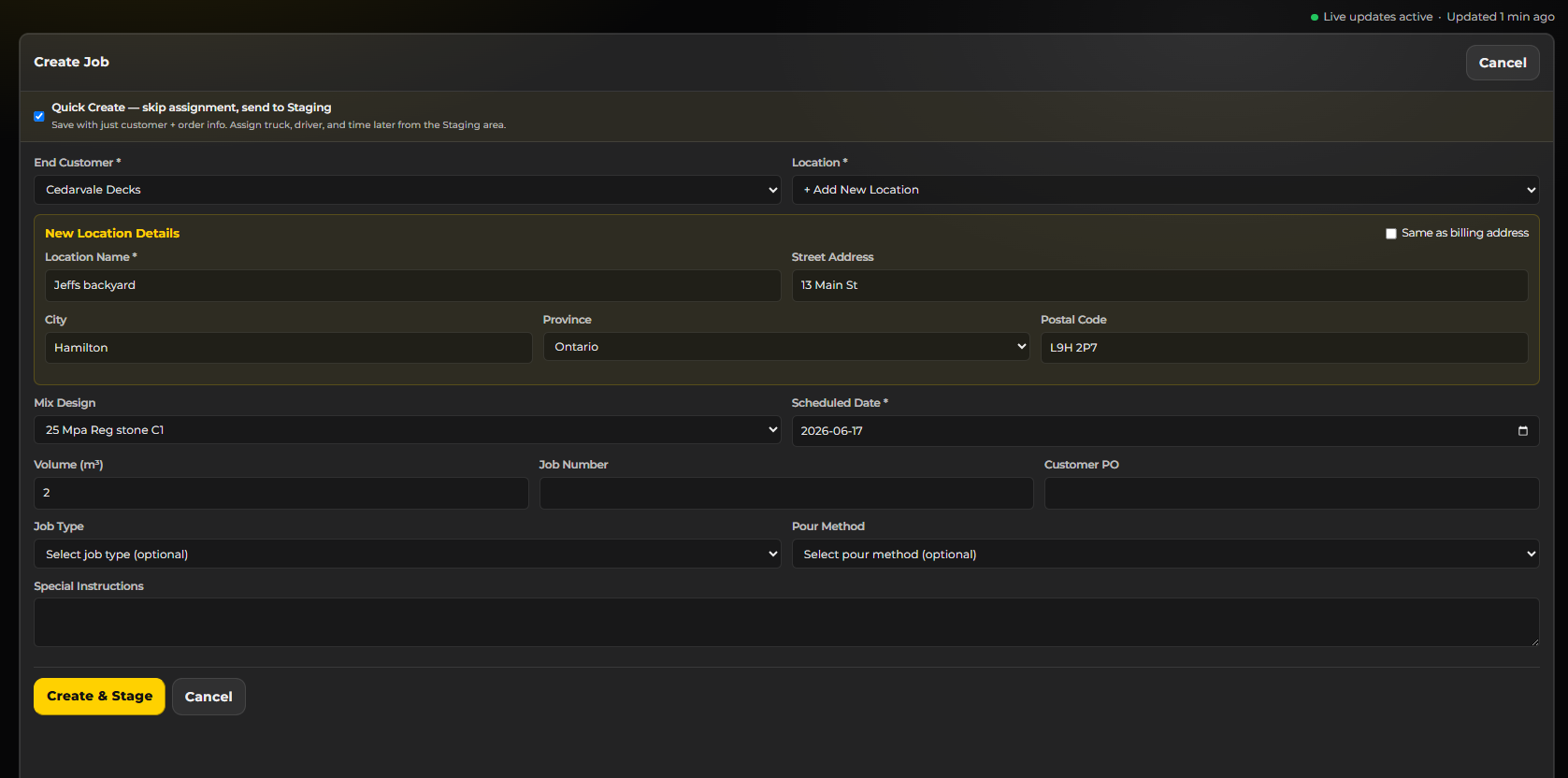
Create a job in seconds — end customer, delivery location, mix design, date and time, truck and driver, volume and site instructions. It lands on the board and the calendar immediately.
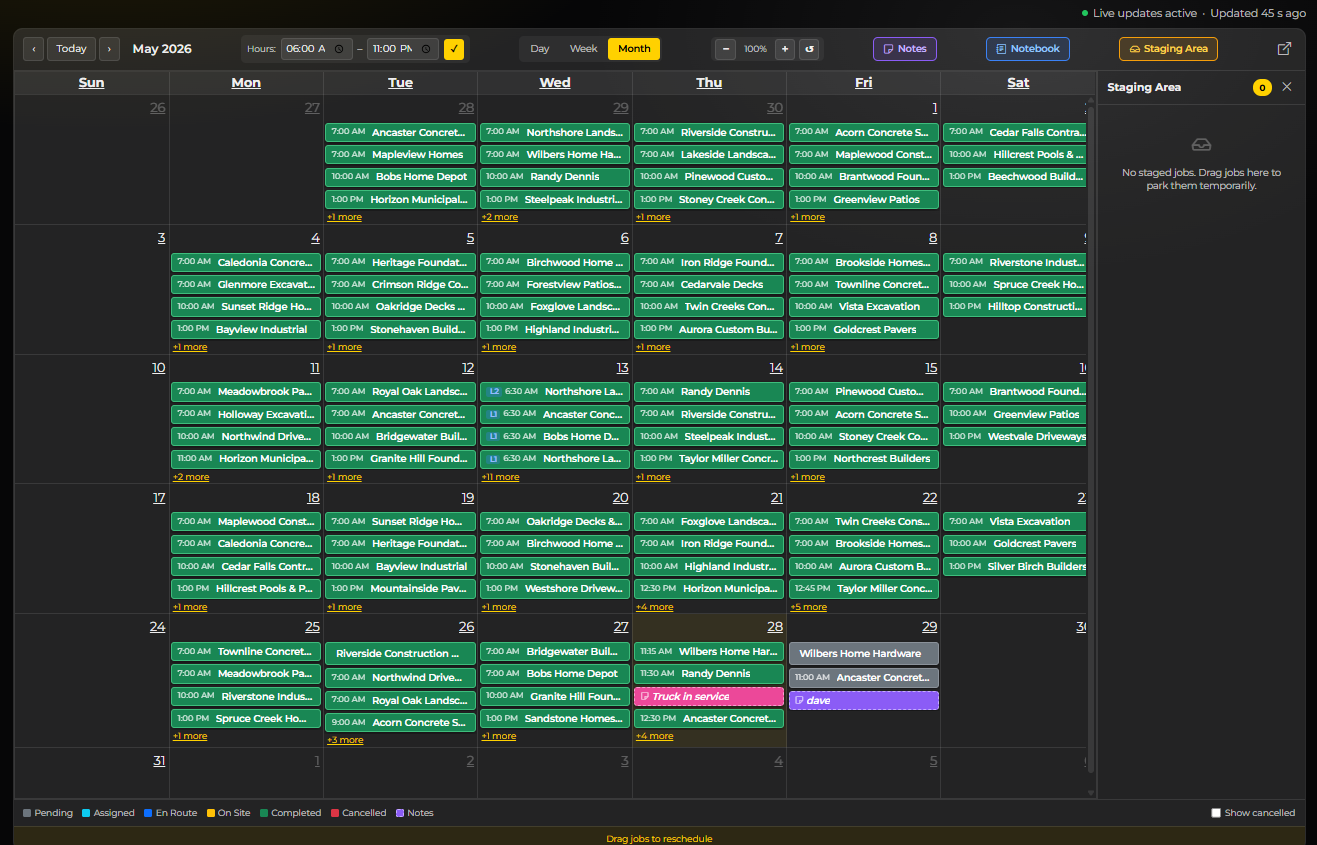
The whole month at a glance, colour-coded by status — pending, assigned, en route, on site, completed, cancelled. Drag a job to another day to reschedule it; double-click an empty slot to create one there.
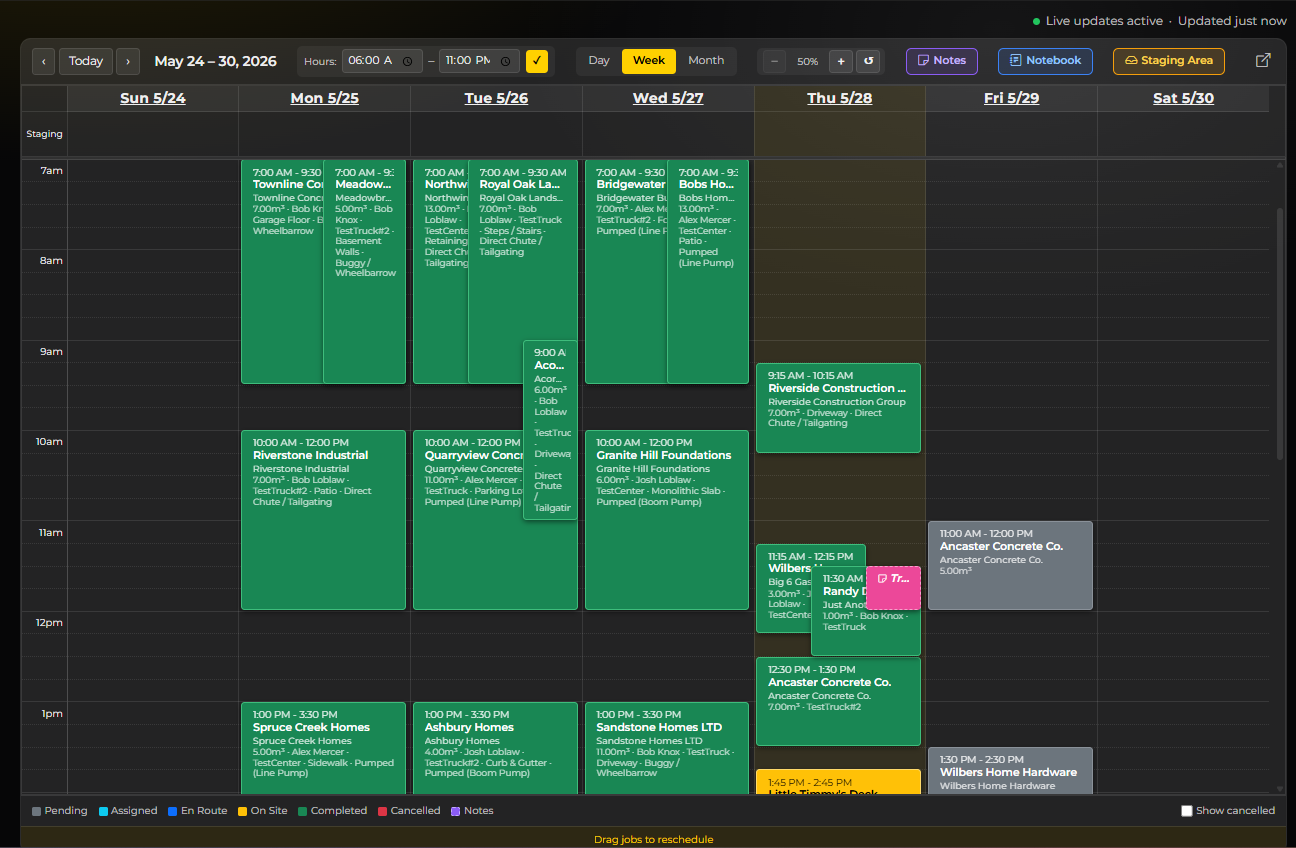
The week broken into hourly slots, so you can see job durations, overlapping deliveries and the gaps you still have to sell.
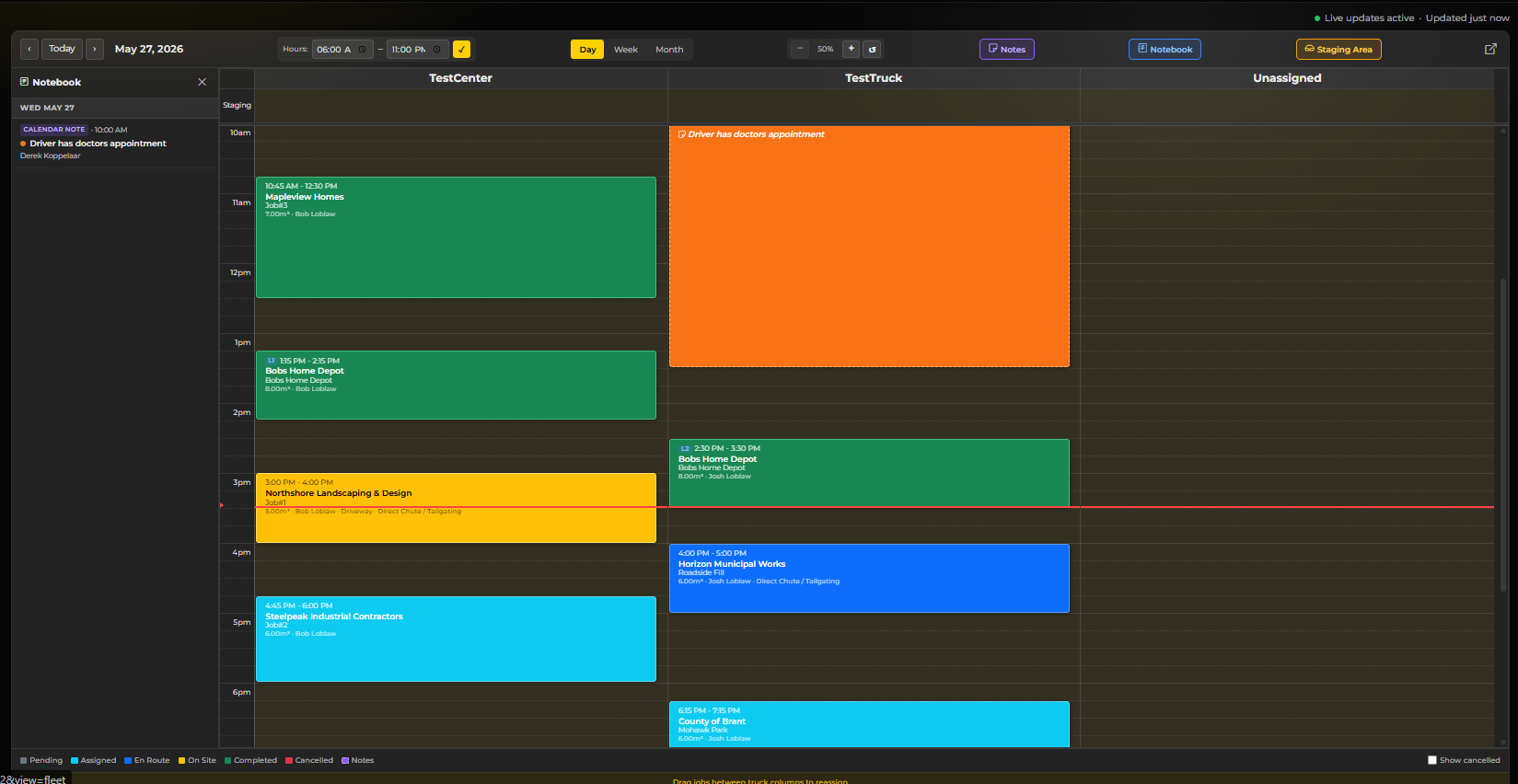
The day split by machine, each truck in its own column. Drag a job sideways to reassign it, up or down to re-time it. Unassigned work waits in its own column until you place it.
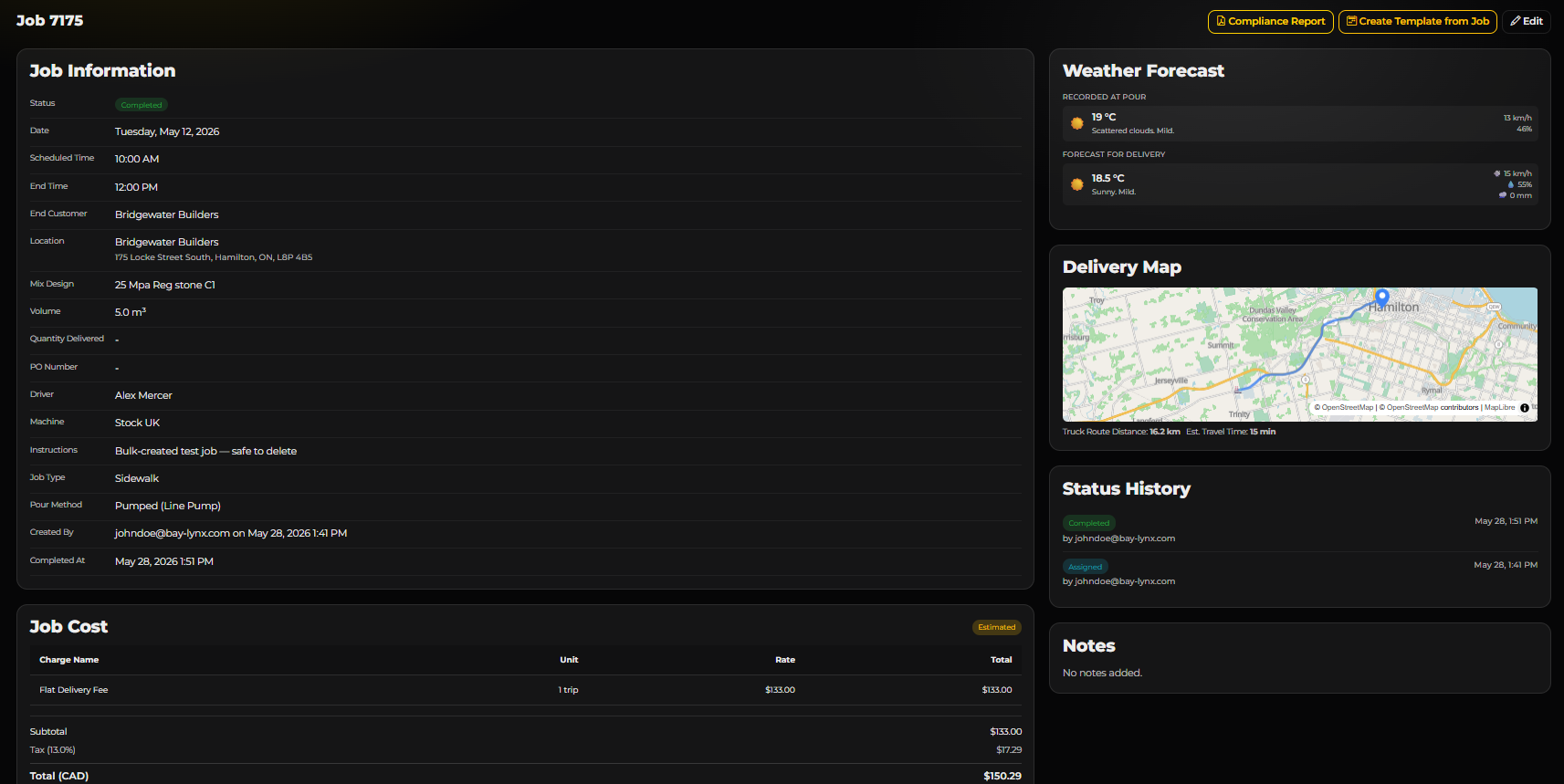
The full record for a single job: end customer, location, mix design, volume ordered against quantity delivered, driver, machine, pour method and site instructions. Beside it, the weather recorded at the pour and forecast for delivery, a delivery map with truck route distance and travel time, a timestamped status history showing who changed what, and the job cost with its charge lines, tax and total.
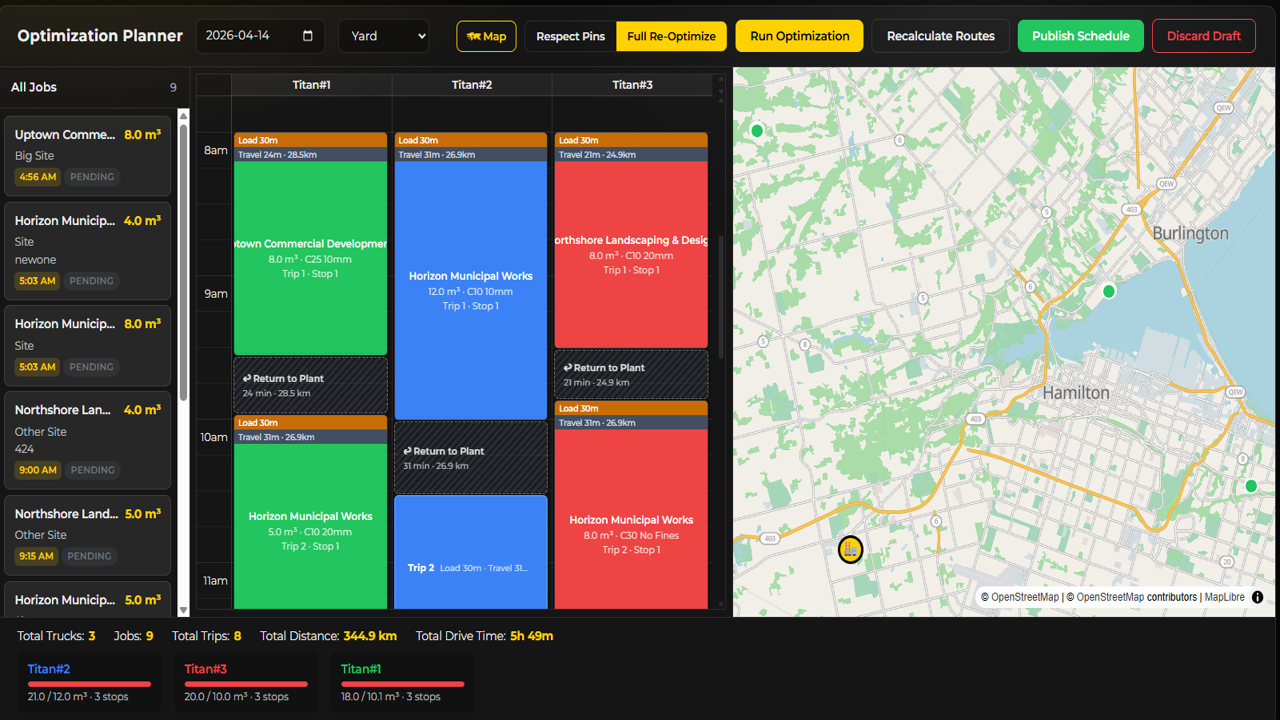
Pick a date, review the scheduled work, and let the optimiser sequence deliveries across the fleet for the least drive time — using each truck's real profile, not car directions. Review the proposed plan truck by truck with load and travel times, pin the jobs you want left alone, then publish it to the schedule or discard the draft.
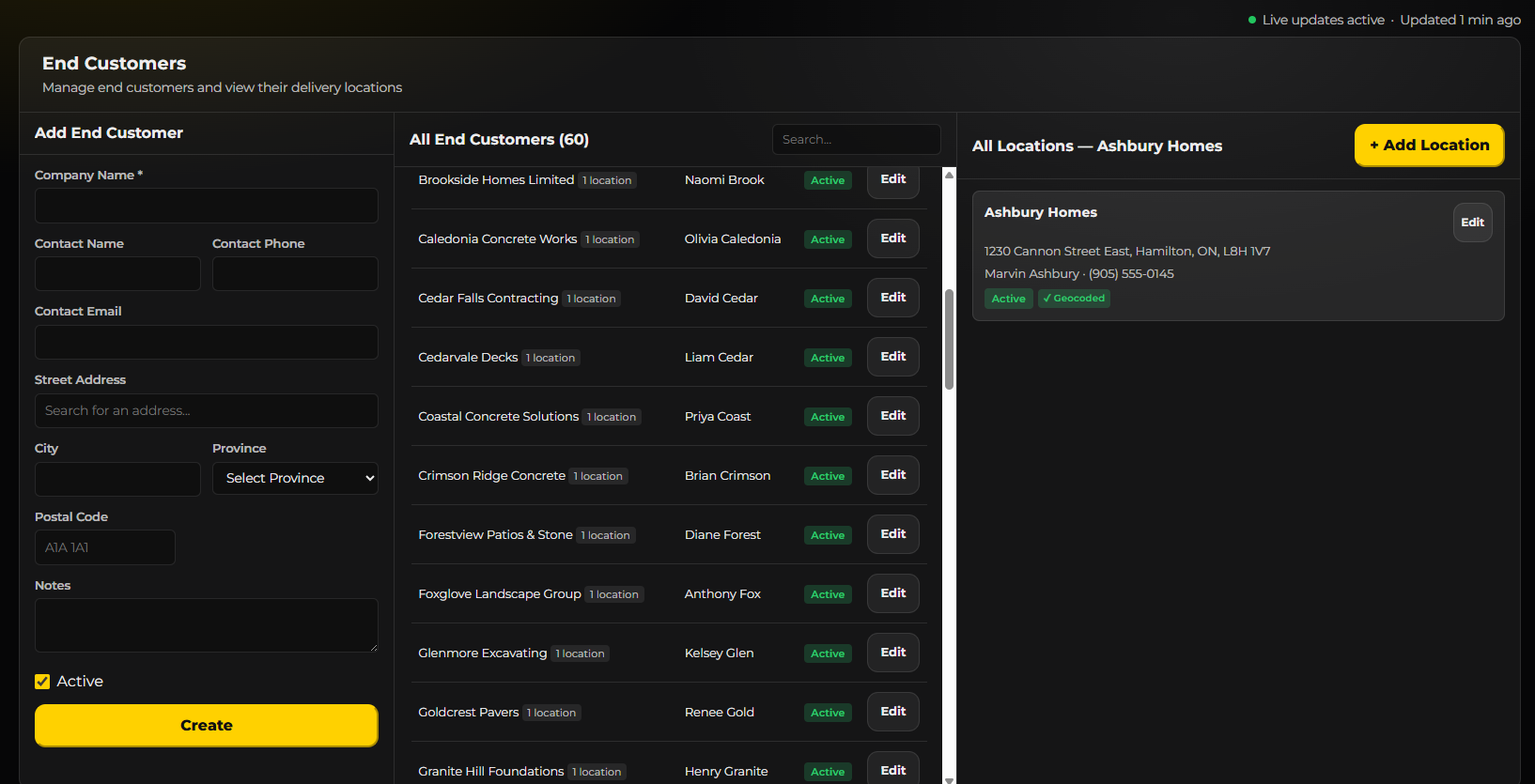
Your customer book, with a contact and any number of delivery locations against each name. Addresses are geocoded as you add them, so every job you schedule for them already knows where it is going.
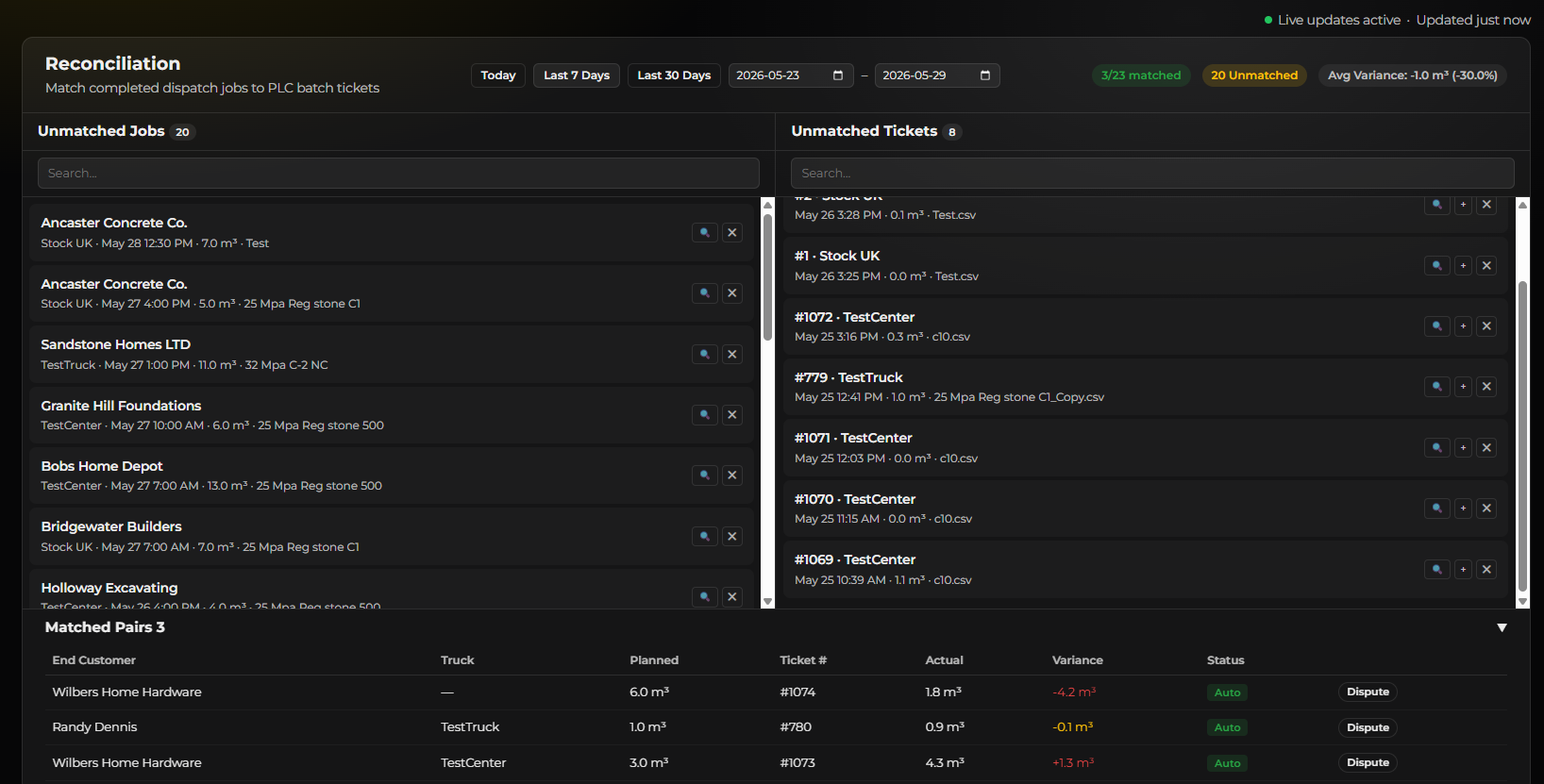
Completed jobs on one side, batch tickets from the machines on the other. Matches are made automatically where they are obvious and by hand where they are not, and every matched pair shows planned volume against actual with the variance called out. Anything that does not add up can be disputed rather than quietly absorbed.
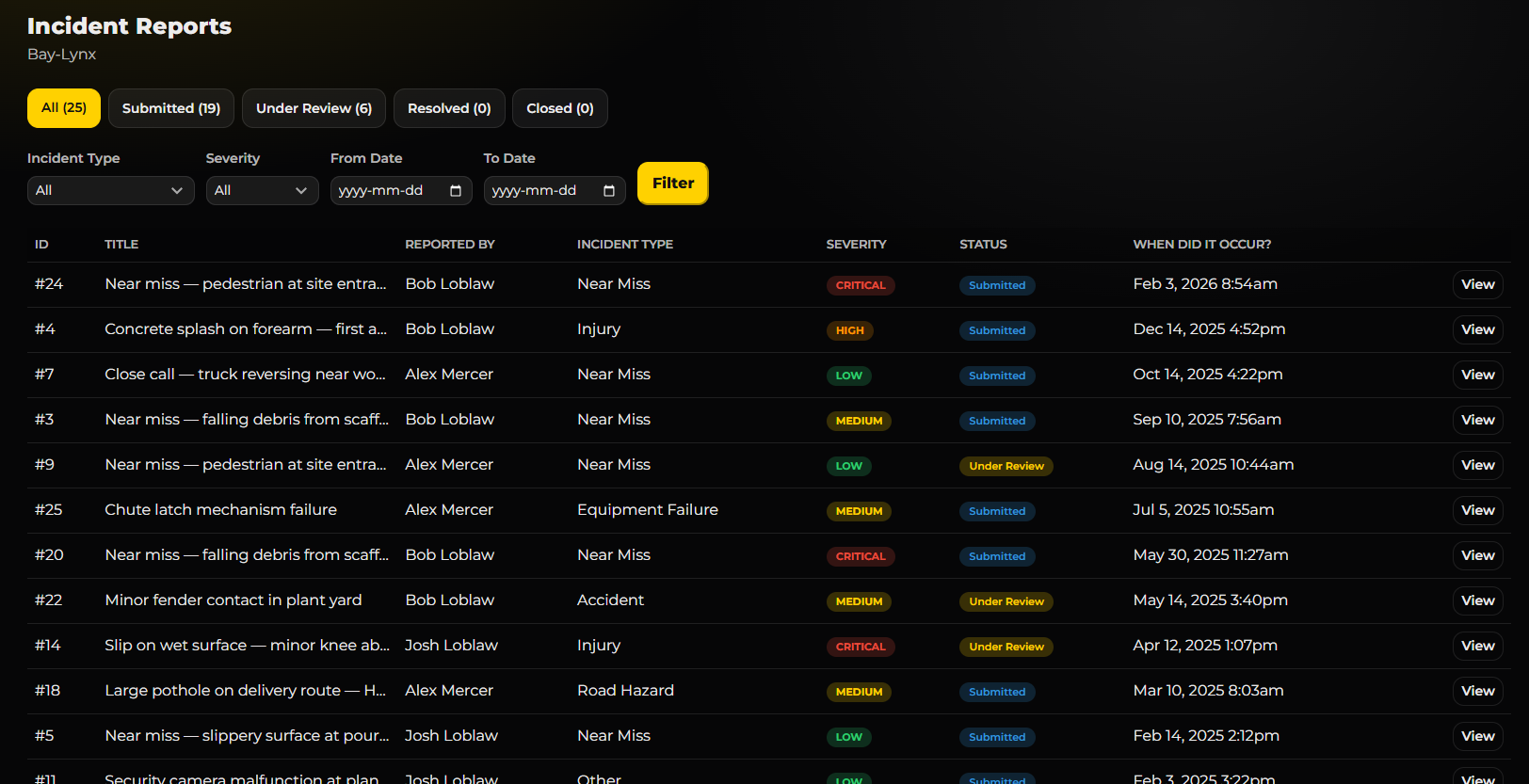
Drivers file incidents and near-misses from the truck, with photos. They land here for review, follow-up and the record you will want later.
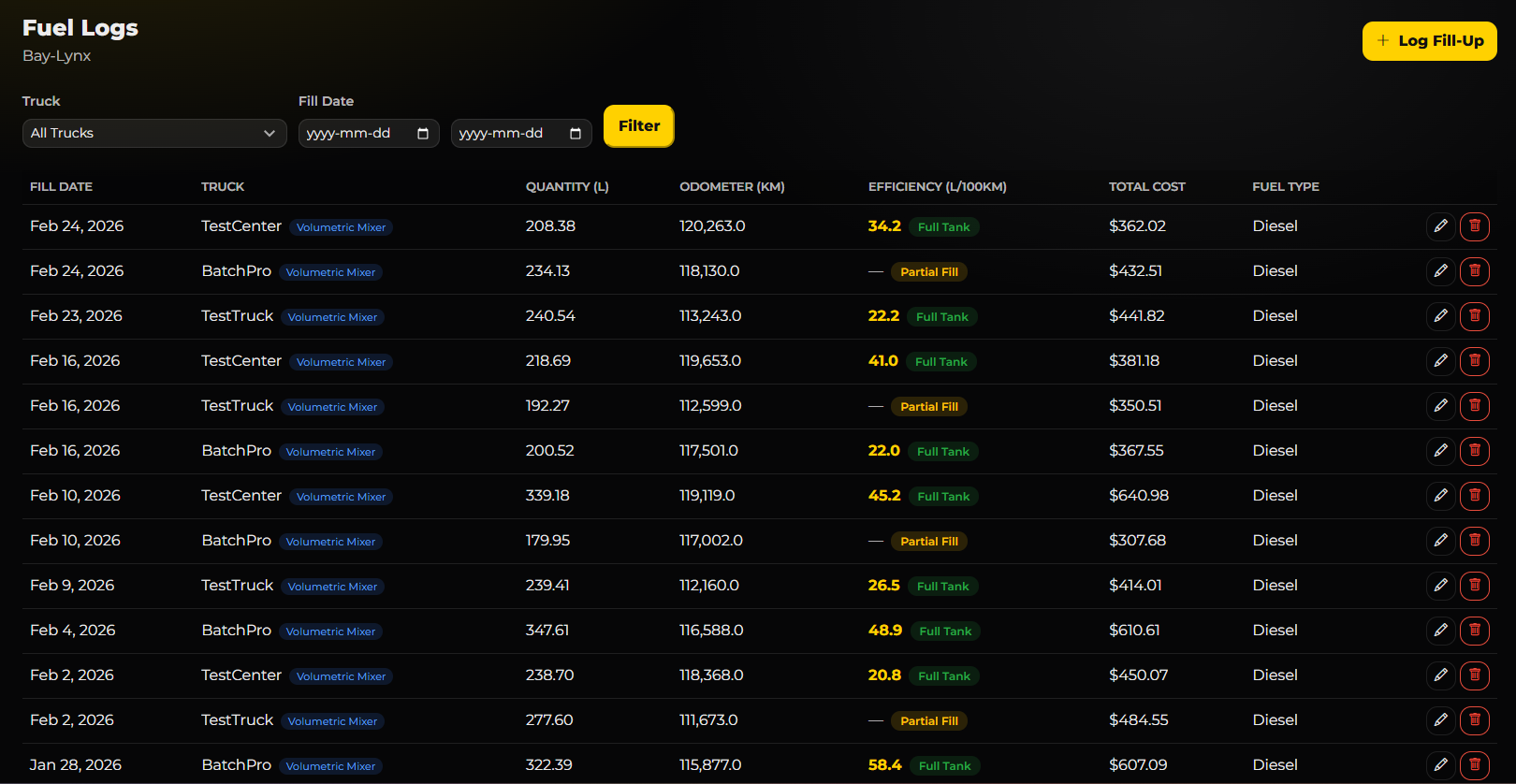
Fuel purchases and consumption per machine, logged by the driver at the pump and fed straight into the fuel efficiency and cost analytics.
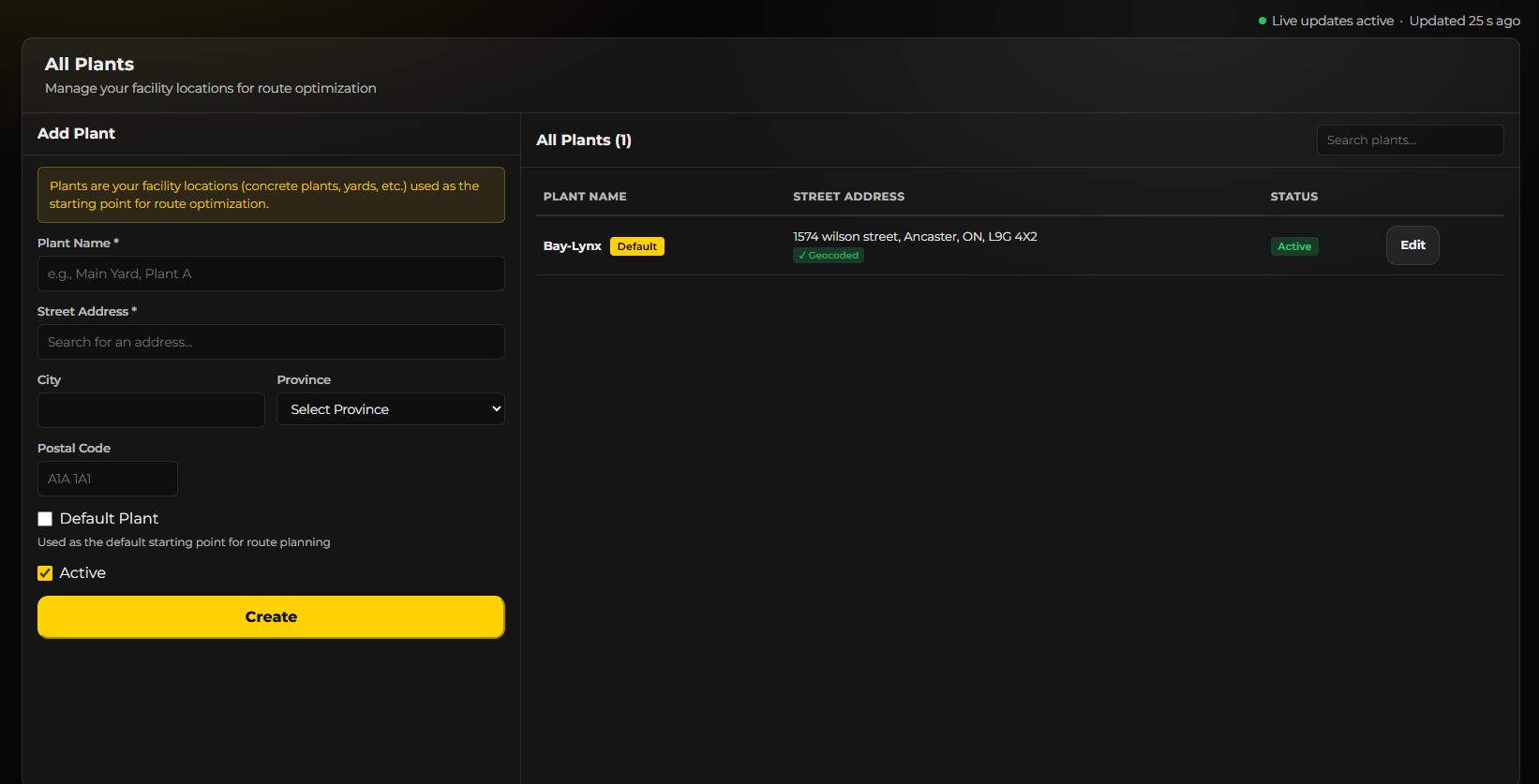
Register your facilities — plants, yards, depots — and set the default. These are the starting points route optimisation plans from and the trucks return to.